Technique
How to Caramelise Onions Properly (and Why 10 Minutes Is a Lie)
Deep, jammy onions are the cheapest way to make almost any savoury dish taste like it took all day. Here is the timing, the pan and the two mistakes that keep most cooks stuck at 'lightly browned'.
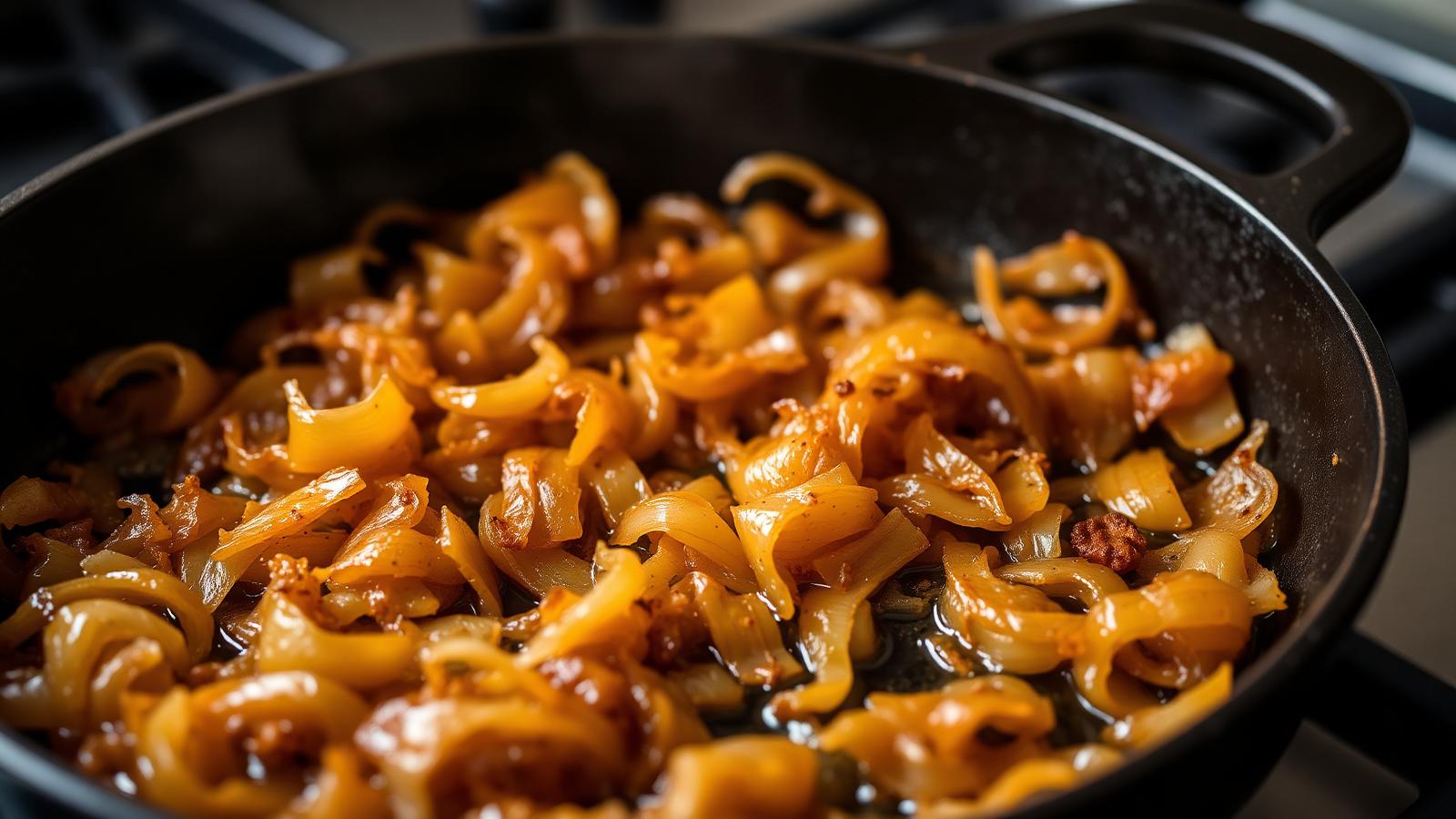
Almost every recipe that says 'caramelise the onions, about 10 minutes' is describing something else entirely — softened onions with a bit of colour. Real caramelisation, the kind that turns onions dark amber and sweet enough to eat with a spoon, takes between 40 and 60 minutes. The good news: almost none of that is active work.
Start with the right pan and the right cut
Use the widest heavy pan you own — cast iron or stainless steel. A wide base gives the moisture somewhere to escape; in a crowded saucepan the onions steam instead of browning, and steamed onions never caramelise.
Slice pole to pole, not across the equator. Lengthwise slices hold their shape through a long cook, so you end up with silky strands rather than mush. Aim for about 3mm — thinner burns before the sugars develop.
- Two large onions per person if they are the main event, one if they are a topping.
- A tablespoon of neutral oil plus a knob of butter: oil for heat tolerance, butter for flavour.
- Medium-low heat the whole way. If you hear aggressive sizzling, turn it down.
Salt early, stir rarely
Add a good pinch of salt in the first five minutes. It pulls water out of the onions so they collapse faster and start browning sooner. Then leave them alone: stirring every thirty seconds keeps wiping the fond off the pan before it can build.
Stir once every four or five minutes, scraping the brown film off the base each time. That film is the flavour — every scrape folds it back into the onions and the colour deepens a shade.
Deglaze when it looks like it is catching
Around the 25-minute mark the base will start to darken faster than the onions. That is the moment for a splash of water, stock, wine or even a spoonful of vinegar. Add two tablespoons, scrape hard, and let it cook away. Repeat as often as needed.
If a patch does burn black rather than brown, tip the onions into a bowl, wipe the pan, and continue. Burnt fond turns the whole batch bitter and there is no fixing it later.
Know when to stop
At 30 minutes they are golden and good for burgers. At 45 they are amber and jammy — the sweet spot for soup, tarts and pasta. Past an hour they turn almost mahogany and taste closer to a preserve; excellent with cheese, too intense for a delicate dish.
Cook a double batch. They keep for five days in the fridge, freeze in ice-cube trays and turn a plain bowl of lentils, a cheese sandwich or a Tuesday omelette into something worth photographing.